
Information
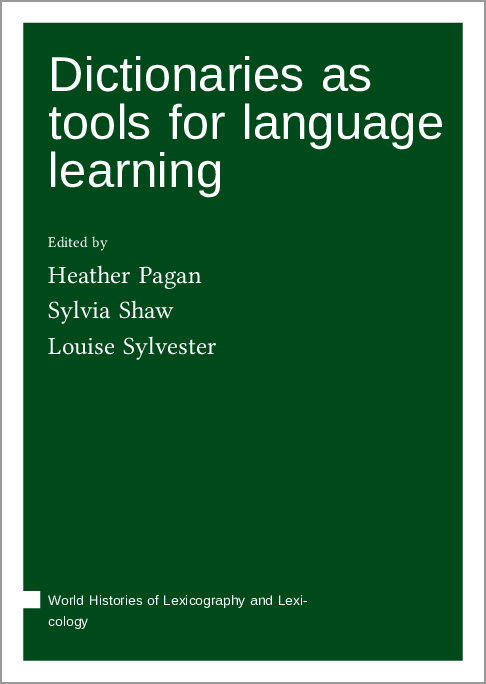
Forthcoming Dictionaries as tools for language learning
Synopsis
John of Garland first coined the term dictionarius in the thirteenth century to describe a text he composed for students learning Latin: a proto-dictionary that provided multilingual translations and definitions of Latin vocabulary. From their earliest origins, dictionaries have therefore been closely associated with language learning. Drawing on papers presented at the 14th International Conference on Historical Lexicography and Lexicology, held in London in June 2024, this volume explores the relationship between dictionaries and language learners from the perspectives of both lexicographers and those seeking to develop their linguistic competence.
Recent research in second language acquisition has highlighted the importance of dictionaries as tools for language learning, particularly in supporting vocabulary development and reading comprehension. However, this scholarship has focused predominantly on modern language learning and the lexicography of contemporary languages, especially in the context of digital and online reference resources. As a result, the historical development of dictionaries as pedagogical tools, and their use by both pre-modern and modern learners, remains comparatively underexplored. This volume seeks to address that gap by examining historical dictionaries as instruments of language learning and by investigating how they have facilitated linguistic acquisition across different periods and contexts.
The contributions collected here examine a range of dimensions of the relationship between lexicography and language learning. The first section presents a series of chronological case studies that explore historical dictionaries and their use by learners across time, offering insights into changing pedagogical practices and learning strategies. The second section focuses on the meta-lexicographical techniques employed by lexicographers to make their works more accessible and useful to learners, including headword selection, labelling practices, the representation of formulaic language, and the treatment of pronunciation. The final papers bring these themes together by considering the opportunities offered by digital approaches and tools, reflecting on the continuing relevance of historical lexicography for contemporary language learners.
Statistics

Forthcoming
November 6, 2026
LaTeX source on GitHub
Cite as
Pagan, Heather, Shaw, Sylvia & Sylvester, Louise. 2026. Dictionaries as tools for language learning. (World Histories of Lexicography and Lexicology). Berlin: Language Science Press.
Copyright (c) 2026 Heather Pagan, Sylvia Shaw, Louise Sylvester (Volume Editor)